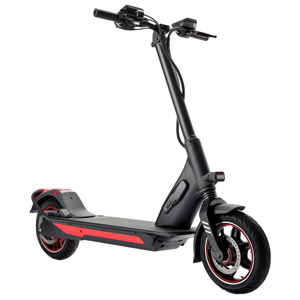
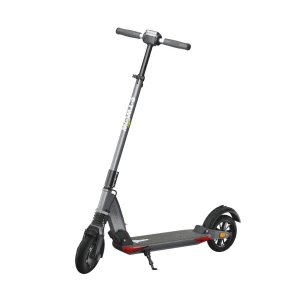
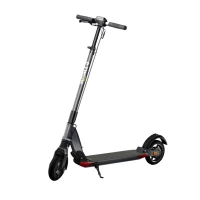
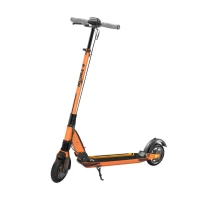
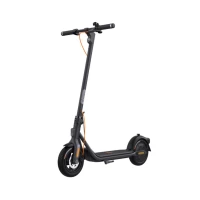
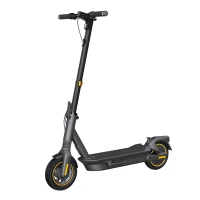
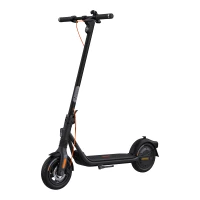
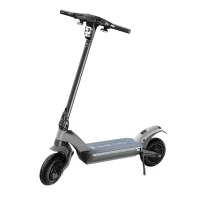
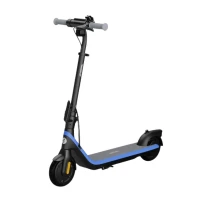
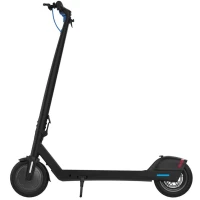
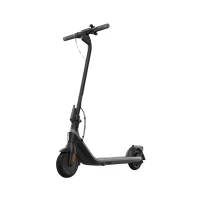
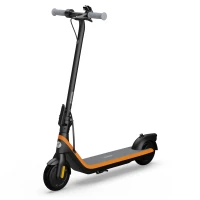
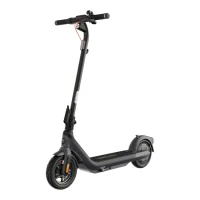
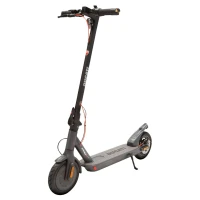
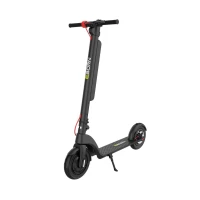
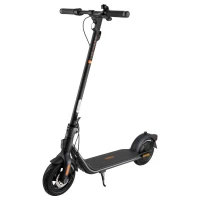
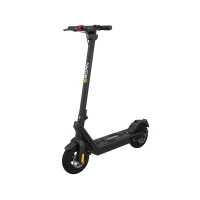
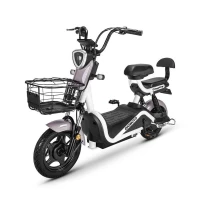
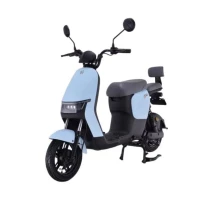
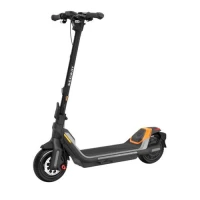
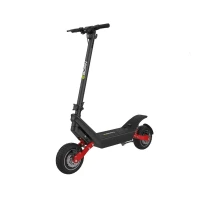
The widest electric scooter range in our catalogue
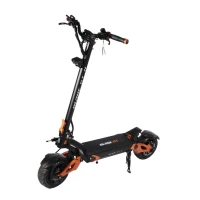
The electric scooter section is where most of our electric transport customers start, and it covers an unusually broad span. At the light end are city models around 130–250 W limited to 16–20 km/h — the Segway-Ninebot KickScooter C2 and E2 family, made for short journeys and for younger riders. In the middle sit the everyday commuting machines: the 500 W E-TWOW S2 Booster ES and S2 GT, the 800 W KickScooter F2 Plus, the Max G2, the P65I at 900 W, the Ducati Pro I Evo, the Blaupunkt ESC608, the Kamikaze K1 and K1 Plus, the Evomoto Cityplay and the CityCat 2 LA. At the top are the dual-motor machines: the E-TWOW TankTorq TK5 with two 1000 W motors and a 21 Ah pack, the Eborn Street Cat and Dirt Cat models, and the 5000 W Teverun Blade GT II.
What actually decides the choice
Power sets the character of the scooter, but the deck, the wheels and the brakes decide whether you enjoy riding it. Solid tyres never puncture and transmit every crack in the pavement; pneumatic tyres ride far better and occasionally need repairing. Drum and disc brakes cope with speed and rain much better than an electronic brake alone. Weight matters the moment the ride ends: a 12 kg folding scooter goes up the stairs, a 40 kg dual-motor machine does not.
- Range. Quoted for a light rider on flat ground at moderate speed; hills, cold and a heavier rider cut it substantially.
- Suspension. Front and rear suspension is the single biggest comfort upgrade on poor city surfaces.
- Water resistance. An IP rating tells you what rain the electronics tolerate — none of them tolerate a flooded kerb.
- Folding. Check the folded dimensions if the scooter will travel by train or live in a hallway.
Related sections
If you already know the manufacturer, go straight to scooters by brand, where the largest ranges are the eleven Segway-Ninebot models and the four E-TWOW machines. For longer commutes with cargo or hills, electric bicycles are usually the more comfortable tool, and the full battery-powered line-up is set out in the electric transport catalogue.
Frequently asked questions
What power do I need for a hilly route?
On flat ground 350–500 W is plenty. If your commute includes real gradients, or the rider weighs more than about 85 kg, look at 800 W and above, or at a dual-motor model. An underpowered scooter does not simply climb more slowly — it drains the battery much faster doing it.
Can an electric scooter be ridden in the rain?
Light rain on a scooter with a proper IP rating is fine; standing water is not. Wet braking distances are much longer, and the biggest risk is not the electronics but painted road markings and tram rails. Dry the scooter afterwards and never charge a wet machine.
All scooters are supplied with a 12–24 month manufacturer guarantee, purchase documents and a pre-dispatch check. We ship across Poland and the European Union, and the range can be tried in Wrocław at ul. Robotnicza 92/94.